

Celebrating Global Pioneers in Kyoto
Three extraordinary individuals received the prestigious Kyoto Prize during a ceremony held on November 10, 2026, at the National Kyoto International Conference Hall. Established by the Inamori Foundation, led by Chairperson Shinobu Kanazawa, the international award recognizes people who have made outstanding contributions to the scientific, cultural, and spiritual development of humanity. Each laureate received a diploma, a Kyoto Prize medal, and a cash award of 100 million yen. The awards ceremony brought together leaders and thinkers to celebrate achievements that shape the future of science and art.
目錄
The three laureates represent vastly different fields of human endeavor. Tsutomu Miyasaka received the prize in the Advanced Technology category for inventing perovskite solar cells. Farooq Azam was honored in the Basic Science category for discovering the microbial loop in marine carbon cycles. Laurie Anderson took the prize in the Arts and Philosophy category for her pioneering multimedia performances.
Transforming Solar Energy with Perovskite
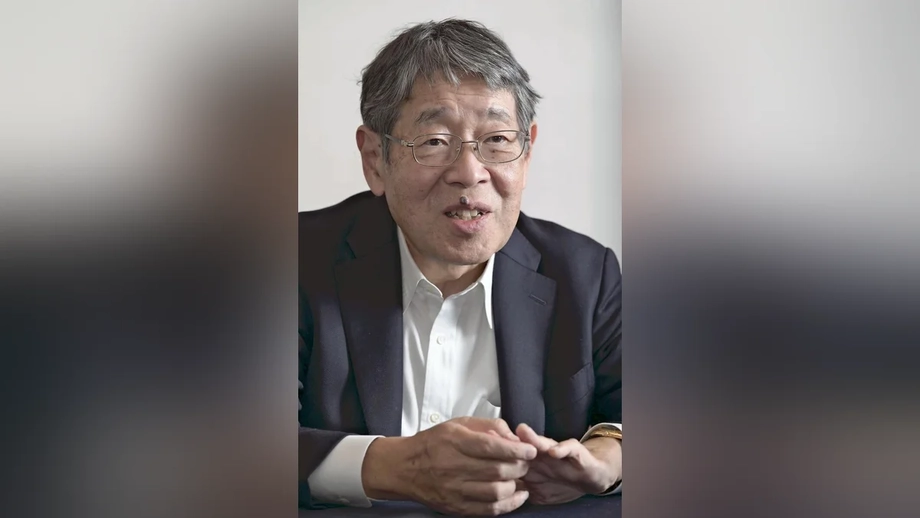
Tsutomu Miyasaka, a 73-year-old distinguished professor at Toin University of Yokohama and visiting professor at Waseda University, spent half a century exploring photoelectrochemistry. Before entering academia, he spent about 20 years working at Fuji Photo Film, now known as Fujifilm. That extensive background working with photographic film inspired him to look for new possibilities using hybrid organic and inorganic materials, leading to the creation of perovskite solar cells. During a lecture to about 1,200 attendees in Kyoto, Miyasaka explained that his research began with a desire to explore the untapped potential of film-like materials.
Perovskite solar cells represent a massive leap forward from traditional silicon panels. While conventional solar panels are heavy and rigid, perovskite solar cells are extremely lightweight and flexible. This unique characteristic allows them to bend and conform to various shapes, opening up new possibilities for installation on curved surfaces, building walls, and roofs that cannot support the weight of heavy glass panels. By reducing the physical load on existing buildings, this technology greatly expands the potential surface area available for capturing clean solar energy.
Overcoming Hurdles in Efficiency and Durability
Laboratory experiments have shown that perovskite solar cells can achieve a power generation efficiency of 28 percent, a figure that rivals the performance of dominant silicon solar cells. However, practical application faces significant obstacles, primarily concerning durability. The material is sensitive to moisture and can degrade quickly depending on environmental conditions. Protecting the cells from humidity requires special sealing films, which adds to the overall manufacturing cost and creates a gap between the cheap raw materials and the final assembled product.
The cost of the perovskite material itself is remarkably low, standing at about 200 yen per square meter. Despite this low material cost, peripheral components such as protective moisture barriers push the total production cost to five to ten times that of traditional silicon panels. Miyasaka and other researchers are currently developing new protective materials and filing for patents to lower these peripheral costs while protecting intellectual property. Securing domestic control over these patents allows Japan to avoid high royalty fees and maintain a competitive edge in global green energy markets.
Building a Domestic Supply Chain
Japan holds a unique strategic advantage in the production of perovskite solar cells because it ranks as the second-largest producer of iodine globally. Iodine is a crucial raw material used in creating the perovskite structure. Miyasaka has strongly advocated for establishing a complete, domestic supply chain ranging from raw material extraction to manufacturing and social implementation. Maintaining control over the entire production cycle helps insulate the country from geopolitical supply disruptions and strengthens national energy security.
The recognition by the Inamori Foundation highlights the importance of transitioning from laboratory research to commercial reality. Miyasaka emphasized his determination to implement the technology domestically, ensuring that Japanese industry benefits directly from the innovation. As research groups and private companies deepen their collaborations, solving the durability issue remains the primary focus for bringing these flexible solar panels into everyday use.
Unlocking the Secrets of Marine Carbon Cycling
Farooq Azam, an 86-year-old marine microbiologist and distinguished professor emeritus at the Scripps Institution of Oceanography at the University of California, San Diego, earned the Basic Science prize for redefining ocean ecology. His groundbreaking work centered on dissolved organic carbon, a substance previously thought to be lost permanently within marine food webs. Azam demonstrated that tiny bacteria and protozoans consume this dissolved carbon, channeling it back into the active food web through a mechanism he named the microbial loop.
This discovery fundamentally changed how scientists understand global biogeochemical cycles. Before the microbial loop concept, marine food chains were viewed as simple linear pathways from microscopic algae to fish and marine mammals. Azam showed that microscopic organisms play a central and active role in regulating carbon flow throughout the oceans. This foundational insight transformed marine ecology and provided essential knowledge for understanding how ocean ecosystems process carbon, a process closely linked to global climate dynamics.
Blurring Boundaries Through Multimedia Art
Laurie Anderson, a 79-year-old multimedia artist, received the Arts and Philosophy prize for her innovative blending of music, visual art, and electronic technology. Known for her experimental yet accessible pop sound, she incorporates spoken voice, physical performance, and digital media to create immersive artistic experiences. Her work crosses traditional boundaries, using humor and advanced technology to challenge how audiences perceive sound and storytelling.
Her creative approach demonstrates how modern digital tools can enhance human expression rather than replace it. By integrating electronic media directly into live performances, she established a unique artistic language that continues to influence contemporary artists worldwide. The official announcement by the Inamori Foundation praised her ability to unite diverse art forms into a cohesive and thought-provoking presentation.
At a Glance
- Tsutomu Miyasaka, Farooq Azam, and Laurie Anderson received the 41st Kyoto Prize on November 10, 2026, at the National Kyoto International Conference Hall.
- Each laureate was awarded a diploma, a Kyoto Prize medal, and 100 million yen by the Inamori Foundation.
- Tsutomu Miyasaka developed lightweight and flexible perovskite solar cells that achieve 28 percent laboratory efficiency.
- Japan is the second-largest producer of iodine, providing a strategic advantage for domestic perovskite manufacturing.
- Farooq Azam discovered the microbial loop, showing how marine bacteria recycle dissolved organic carbon back into ocean food webs.
- Laurie Anderson was honored for pioneering multimedia performances that combine music, speech, and electronic technology.